




















France Develops a Heart That Can Beat Forever Without Stops
Throughout the world, in hospitals, there exists a sad and unseen reality: patients in line for a heart transplant often die before a donor organ becomes available. It is this reality that has spurred a team of scientists to think of something that was thought impossible: not healing the heart, not helping it, but replacing it entirely. This has become a reality in France, as a team of scientists has created an artificial heart that is intended for use within the human body.

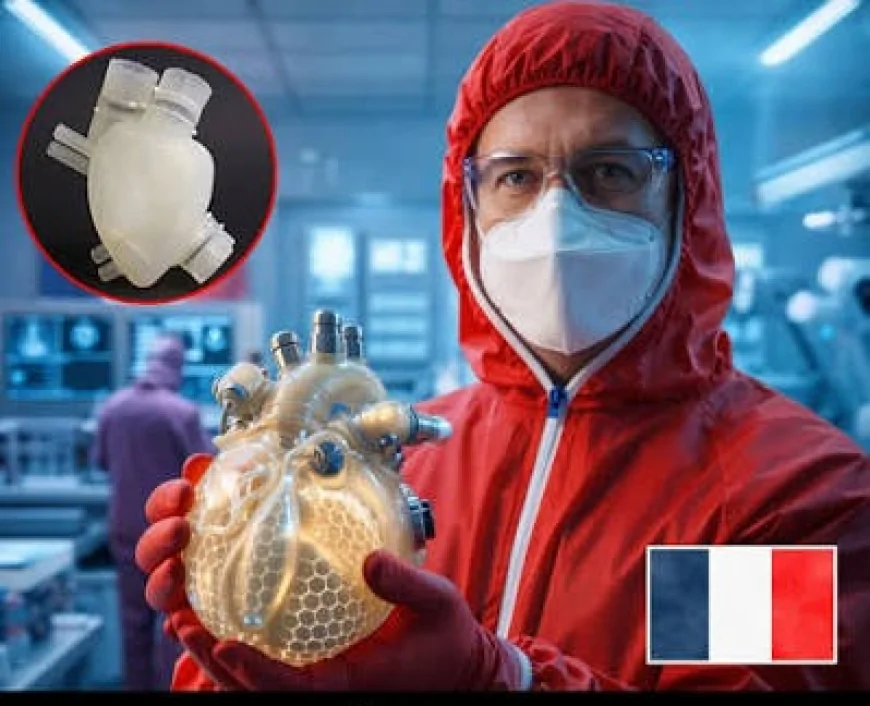
At the heart of this innovation lies a French biomedical company called Carmat, which has taken several years to create something that goes beyond just pumping blood. The device, called the Aeson artificial heart, represents a new generation of artificial organs, which are basically machines that try to act like living tissues. Unlike other artificial hearts, which beat to a constant rhythm, this one has the capability to respond to the body’s needs through sensors that adjust the flow of blood depending on whether the body is resting, walking, or under stress, just as a human heart would.
This journey has been a long one, and it has been marked by a lot of hopes and doubts. It is to be noted that the first time this artificial heart was implanted in a human was in the year 2013 in France. This was a historic moment in the field of medical science, as it was the first time a device designed to replace the human heart completely, and not assist it, was being implanted in a human. After this, the technology has been further perfected, and a lot has been learned about the longevity of the device.
A lot of the thrill surrounding the artificial heart lies in its potential to one day “work forever,” thus making organ donation obsolete. While this sounds fascinating to the world, the truth behind the matter lies elsewhere. The device has the potential to be used for a long time, possibly forever, but the question of its durability over a long period of time still remains to be researched. The dream of an endless heartbeat through technology may not be here just yet, but it’s closer than ever before.
Beyond the scientific, there are other, more intriguing issues when it comes to the invention and the future of medicine and mankind. If a mechanical device can replace a human organ, what does this say for the future of mankind? It blurs the lines between human and technology, and it makes one wonder if the future of mankind will be based on the advancements of technology and not the limitations of mankind. However, there are challenges associated with the device, and it makes it difficult to consider it for use.
However, the importance of this discovery should not be overlooked. It is a change in the way the world deals with one of its most critical health issues. Rather than waiting for life to be preserved through the tragedy of another person’s death, science is trying to create life-preserving solutions from within. In this regard, the artificial heart is not just a tool, but a metaphor of man’s desire to transcend even the most basic limitations of the body itself.
As this research goes on, one thing is evident: the future of the human heartbeat is being rewritten. And although the concept of a heart that never fails is still a work in progress, the road to achieving this is already underway.