










Trump Claims Talks with Iran, Tehran Denies: Truth or Strategy in a Time of War?
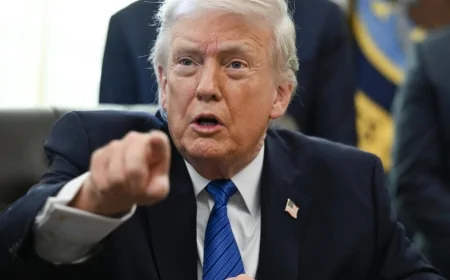
With the tensions between the United States and Iran continuing to rise, a new war has begun, but this time it is not a war of guns but a war of words. At the center of this war is Donald Trump, who made the claim that talks have been going on with Iran in order to reduce the tensions. However, this was immediately denied by Iran, calling it false and misleading.

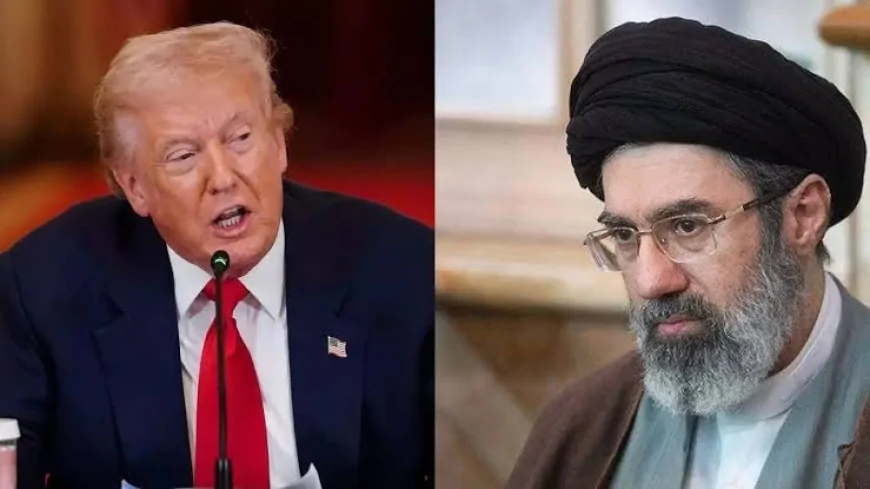
The real issue in this situation has been to determine whether this is actually true or simply a ploy to shape perceptions around the world.
From an American perspective, hinting that talks are in progress might have several benefits. It projects an image of control and statesmanship, especially in a time where tensions might escalate further. It also provides both citizens and foreign allies with a sense of hope that there is a possibility of de-escalation in the region. This is important in politics, where perception is a powerful tool, and talks of negotiations might help to assuage certain concerns and redirect global attention.
For Iran, however, denying talks is of equal importance. To admit that talks are in progress, especially in response to external pressure, might be perceived as a sign of weakness on their part. By denying President Trump's claims of talks, Iranian leaders might reinforce their image of independence and resilience in a region where such an image is crucial to their politics and foreign relations.
However, there is a more complex picture beyond this, and this is where communication is not always direct. It is possible to communicate indirectly, and this means that both sides might be able to keep their image while still having their options open.
What makes this picture interesting is that it happens at a very interesting time, and this is because, with tensions running high, any information, whether true or false, might have a great impact. A statement about negotiations might help to reduce panic or, on the contrary, increase it if it is immediately denied. This is a time where information is a powerful tool, and this is because it is not just a matter of opinion, but of outcome.
The disagreement between Trump and Iran, therefore, is not just about the existence or non-existence of the talks. The disagreement is part of a larger conflict about narrative, influence, and control. Each side is not only reacting to the other; each side is also speaking to the world and attempting to shape the narrative about how the world understands the conflict.
Ultimately, the truth may not be so clear-cut as a yes or a no. Conflicts and negotiations during times of war are rarely easy, and the words that are said do not always reflect the reality that is taking place behind the scenes. The fact that words may be just as powerful as actions, and in some cases even more so, is undeniable in today’s conflict.