










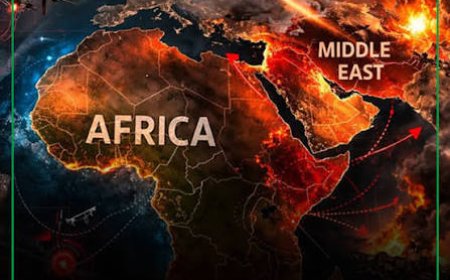


Beyond the Guns: The Quiet Strategy That Gives Iran Its Strength
When one thinks of war, one thinks of the sounds of fighter jets flying across the sky, missiles blazing across the night sky, and politicians engaging in verbal jabs on television. But with Iran, the reality is that the true strength lies not in what the rest of the world sees.

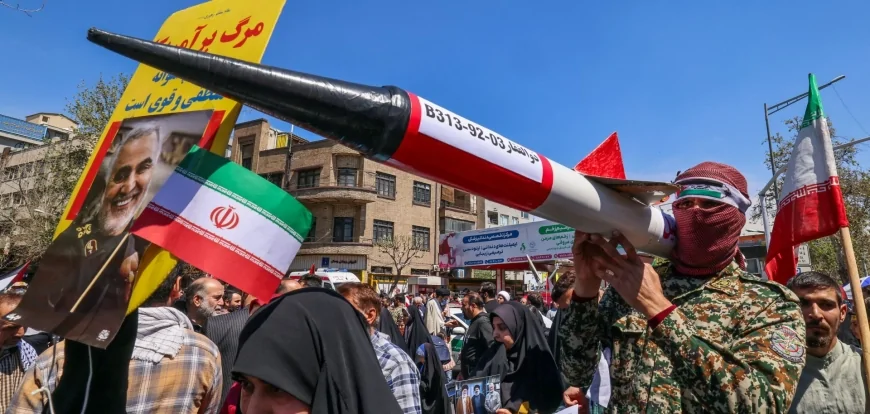
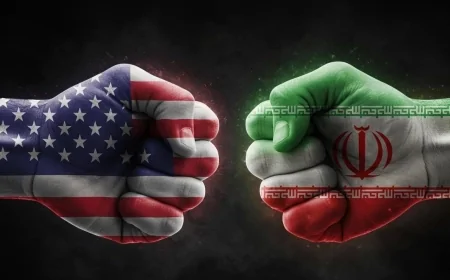
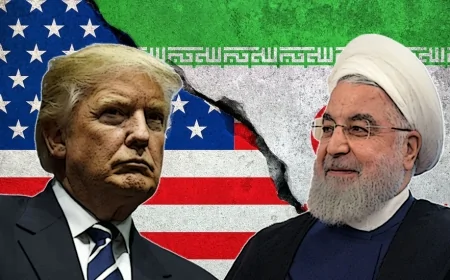
The reality is that Iran is not trying to win a war like the rest of the powerful nations in the world. They know they cannot compare to the United States in terms of military prowess, technology, or global influence. Therefore, instead of competing, they have taken a smarter and quieter approach.
At the heart of this strategy is time. Iran does not focus on quick victories. It does not, like other stronger nations, try to bring wars to a quick close. Rather, it sets up situations where the war does not come to a quick close, where the situation is built up slowly, and where the cost of continuing to fight is higher for the enemy than for Iran itself. In this sort of war, surviving is winning.
Another aspect of Iran’s strength is how it extends its reach outward. Rather than relying on its own army, Iran has a multi-layered strategy. It has its influence, its relationships, and its indirect connections, allowing it to extend its reach outward without being directly seen. This causes confusion for its enemies, as they are not always sure where the next move will come from or who is behind it. And uncertainty is a powerful ally in war.
Iran, too, is focused on disruption, not destruction. Iran does not always try to win the conflict. Iran interferes, Iran delays, Iran complicates. Iran develops small, persistent pressure points, pressure points in trade, pressure points in movement, pressure points in stability. While these individual elements may not, in and of themselves, seem like much, taken together, they become a larger effect, slowly tilting the scales.
There is another aspect of this strategy, too. Iran, like the other countries, recognizes the psychological aspect of conflict. Iran recognizes that fear, doubt, confusion can often be as potent as force. Iran, by showing that it can fight back in different ways, in different places, forces its opponents to think twice before acting. Iran forces them to hesitate. And hesitation, in a conflict like this, can change everything.
The beauty of the strategy is such that it is not dependent on one moment or one battle. It is a continuous process. It is flexible. If the pressure is high in one place, the strategy shifts to another. This strategy is not easily predictable, and it is not easily defeated.
The challenge of the quiet strategy is such that it is not easy to endure the pressure. This strategy is not designed for success or for winning. This strategy is designed to last in the game.
In the end, the strength of Iran isn’t in overwhelming its foes. The strength of Iran is in understanding the nature of modern war. This isn’t just a war of arms; it’s a war of endurance, of influence, of control.
And in this war of influence and control, it’s often the loudest voice that isn’t the strongest. Sometimes it’s the quietest voice that will last the longest.