













Has America Secretly Lost the War? The Hidden Truth Behind the Iran Conflict
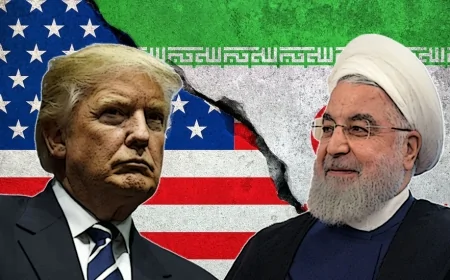
For months, the global community has been closely following the escalating conflict between the United States and Iran. Official pronouncements from Washington depict a scenario where the United States maintains control, Iranian assaults are contained, and the conflict advances according to American objectives. While headlines herald "victories," analysts commend the precision of American strikes. However, a different narrative may be playing out behind the public facade.

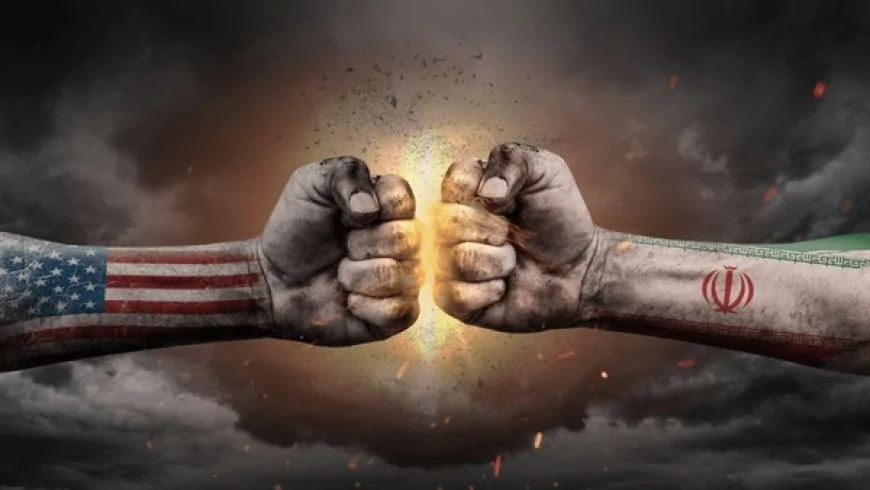
Evidence and patterns indicate that the United States may have lost the war without public awareness, and the actual situation on the ground is far more intricate than official statements acknowledge.
A War Beyond the Battlefield
This conflict is not limited to conventional frontlines. In contrast to past conflicts, the U. S. -Iran confrontation spans deserts, cities, cyberspace, and diplomatic arenas. Drones launch surprise attacks in the middle of the night, cyber assaults target both military and civilian infrastructure, and covert operations take place well beyond the reach of journalists. Every missile intercepted and every facility destroyed signifies merely a fragment of a far larger, unseen conflict.
Iran has perfected asymmetric warfare by employing precise, small-scale missile strikes, unmanned drones, and underground networks to challenge American military supremacy. These tactics generate setbacks that often go unnoticed by the public. While press releases highlight victories, the relentless, behind-the-scenes losses accumulate, straining U. S. logistics, exhausting personnel, and revealing hidden vulnerabilities.
The Invisible Frontlines
Unlike traditional wars, which feature clearly defined front lines and measurable territorial gains, modern conflicts frequently lack distinct indicators of victory or defeat. In Iran's case, the frontlines are just as psychological and strategic as they are physical. Despite facing relentless military pressure, Iran has persistently disrupted shipping lanes, threatened regional allies, and influenced energy markets.
Analysts observe that the United States encounters difficulties in maintaining operations across multiple theaters. Supply chains are under pressure, intelligence networks are stretched to their limits, and domestic political divisions create an urgent demand for public success. The evidence suggests a conflict in which American control is far from absolute, and where the public narrative of dominance may obscure deeper, ongoing struggles.
Economic Warfare and Global Ripples
The consequences of the war reach far beyond bombs and missiles. Iran's actions have repeatedly disrupted the Strait of Hormuz, a critical route for nearly 20% of the world's oil shipments. These disruptions send shockwaves through global markets, triggering surges in fuel costs, inflation, and worldwide economic instability. Although official reports highlight control of strategic locations, the indirect costs of the conflict are vast and frequently go unreported.
Iran's strategies also leverage the economic arena. Cyber attacks on infrastructure, shipping, and banking systems generate challenges that are not reflected in victory declarations. Even when the United States successfully intercepts attacks, the persistent strain on resources and the resulting global economic disruptions demonstrate that losses extend far beyond mere military defeat.
Redefining Victory
In modern warfare, victory is seldom absolute. It is not defined merely by the territory acquired, military equipment destroyed, or political declarations made. Rather, it is defined by influence, stability, and the capacity to maintain operations without incurring catastrophic losses. The evidence indicates that America's sense of control is likely incomplete, as unrecognized economic, strategic, and political setbacks have significantly influenced the war's trajectory.
Even military victories can come with a cost. The prolonged deployment is exhausting the soldiers, intelligence operations are being pushed to their breaking point, and regional tensions remain at a simmer. In this context, the conventional notions of winning and losing fade into obscurity, supplanted by an ongoing equilibrium between apparent triumphs and unseen defeats.
The Global Perspective
The world observes, frequently depending on public declarations to assess progress. Allies, adversaries, and international observers often misinterpret America's actions due to incomplete information, occasionally overestimating U. S. dominance or underestimating Iran's resilience. The global ramifications of the conflict, spanning energy security, regional stability, and international diplomacy, highlight that victory is not determined solely on the battlefield, as perception and endurance are equally critical.
In the end, the narrative of the U. S. -Iran conflict transcends bombs, missiles, and headlines. It explores the boundaries of power, the obscurity of contemporary conflict, and the realities hidden beneath public narratives. Evidence suggests that America may encounter in this war challenges that the public has not been informed about. Alongside celebrated victories lie setbacks, losses, and strategic frustrations, prompting a fundamental question: has America quietly lost ground without the world realizing it?
The conflict persists with its outcome remaining uncertain. Behind the facade of public declarations lies the concealed reality of contemporary conflict: control is precarious, appearances are often misleading, and no nation, however powerful, is entirely immune to challenge.