



















AI in Your Pocket: How Smart Assistants Are Quietly Taking Over Everyday Life
Just a few years ago, artificial intelligence felt like something from science fiction movies. Today, it lives in our pockets, speaks in our homes, writes our emails, edits our photos, recommends what we watch, and even helps us make decisions. From smartphones to smart speakers, AI-powered assistants are no longer futuristic experiments, they are part of everyday life. And while many people enjoy the convenience, experts say this silent digital takeover is reshaping how humans think, work, and interact.

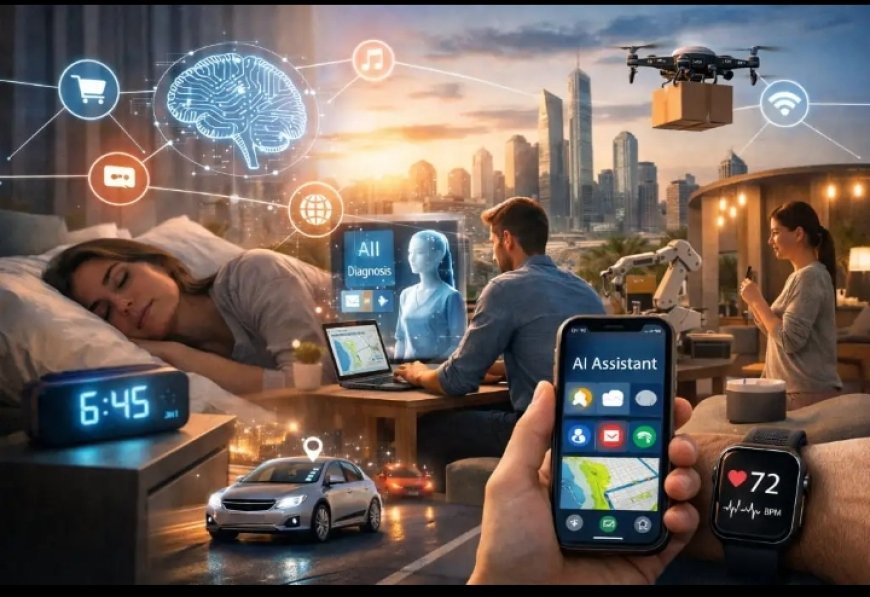
The rapid growth of AI assistants has been driven by massive improvements in machine learning and natural language processing. These systems are now able to understand human speech more naturally, respond in conversational ways, and learn from user behavior. When you ask your phone for directions, remind it of a meeting, or request music, AI processes millions of data points in seconds. It feels simple, but behind the scenes is a powerful network of algorithms constantly learning from human interaction.
One of the biggest reasons for AI’s popularity is convenience. People no longer need to remember phone numbers, routes, or even facts. Information is available instantly. Students use AI tools to explain difficult topics. Business owners use digital assistants to schedule meetings and respond to customers. Content creators use AI to generate ideas, edit videos, and design graphics. The technology saves time, reduces effort, and increases productivity.
But this growing reliance raises an important question: what happens when we depend too much on smart machines? Some researchers warn that heavy dependence on AI tools may weaken memory and problem-solving skills. If a machine writes your messages, corrects your grammar, and plans your day, are you still actively thinking, or simply approving suggestions? Technology experts say the concern is not about AI replacing humans, but about humans becoming passive users instead of active thinkers.
Privacy is another major issue. AI assistants collect large amounts of data to improve performance. They learn your habits, preferences, routines, and sometimes even your voice patterns. While companies promise data protection, cybersecurity risks remain real. A data breach or misuse of personal information could expose sensitive details about millions of users. As AI becomes more integrated into daily life, debates around data privacy and digital rights are becoming louder.
At the same time, AI is transforming industries at an incredible speed. In healthcare, smart systems help doctors detect diseases earlier and analyze medical scans with impressive accuracy. In finance, AI monitors fraud and predicts market trends. In agriculture, farmers use AI-powered sensors and drones to monitor crops and improve yields. Even in transportation, self-driving technology is advancing, bringing the idea of autonomous vehicles closer to reality.
The job market is also feeling the impact. Some tasks that once required human workers are now automated. Customer service chatbots handle thousands of inquiries at once. AI tools can draft reports, analyze data, and even create basic designs. While automation may reduce certain job opportunities, it also creates new roles in tech development, data analysis, cybersecurity, and AI ethics. The challenge for many countries is preparing workers with digital skills to adapt to this shift.
Young people are especially influenced by AI integration. For students growing up with smart assistants, interacting with AI feels natural. They ask devices questions before asking teachers or parents. They use AI to brainstorm ideas or summarize lessons. While this can support learning, educators stress the importance of balance. Critical thinking, creativity, and independent reasoning remain essential skills that technology should support, not replace.
Despite concerns, innovation continues at full speed. Tech companies are competing to build more advanced AI systems capable of understanding emotions, translating languages instantly, and generating realistic images and videos. Some developers are even working on AI companions designed to offer emotional support and conversation. As these tools become more human-like, the line between technology and social interaction may become increasingly blurred.
Governments around the world are now racing to create regulations that can keep up with AI development. Lawmakers are discussing how to protect citizens’ data, prevent misinformation generated by AI systems, and ensure that artificial intelligence is used ethically. The speed of innovation often moves faster than policy, creating a gap that societies must urgently address.
What makes this moment unique in technological history is not just the speed of change, but how deeply integrated AI has become in personal life. Unlike previous technologies that stayed in offices or factories, AI assistants sit in bedrooms, kitchens, and pockets. They are present in private conversations and daily routines.
The future of AI will depend largely on how humans choose to use it. Will we design systems that enhance our abilities while protecting our independence? Or will convenience lead us to hand over more control than we realize? Technology itself is neutral; it reflects the intentions and habits of the people who build and use it.
In the end, AI assistants are not just tools, they are shaping habits, expectations, and even human behavior. As artificial intelligence continues to evolve, society faces an important responsibility: to stay informed, stay critical, and ensure that technology remains a servant to humanity, not its master.