



















Why the Moon Turned Red This March, and 3 Other Amazing Things Happening in the Sky
A stunning celestial event captured the world’s attention on March 3–4, 2026 as the full Moon turned a deep red hue during a rare total lunar eclipse, often called a Blood Moon. Skywatchers across North America, Asia, Australia, and other parts of the world were treated to an unforgettable astronomical show, and scientists say it’s just the beginning of a month full of remarkable sky events.

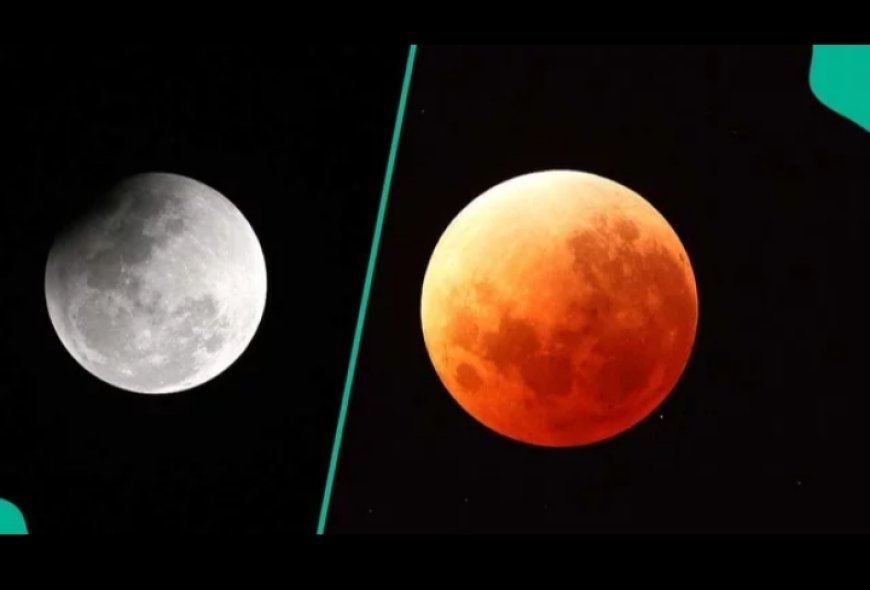
Why the Moon Turned Red
The Moon appeared red because Earth passed directly between the Sun and the Moon, casting a shadow over the lunar surface. During a total lunar eclipse, Earth’s atmosphere filters sunlight: shorter blue and violet wavelengths scatter out, while longer red and orange wavelengths bend around Earth and fall onto the Moon, giving it that coppery glow.
Astronomers describe this phenomenon using light physics and atmospheric science. The same scattering effect that makes our sky look blue and sunsets look golden also bends red light toward the Moon during the eclipse. This dramatic color shift is safe to watch with the naked eye, unlike solar eclipses that require protective glasses.
This March’s Blood Moon was particularly special because it was the last total lunar eclipse visible until late 2028 or early 2029, making it a rare opportunity for skywatchers around the globe.
Event 1: Venus and Saturn Dance Close Together
March 2026 doesn’t just bring the Blood Moon, it also features a planetary conjunction between Venus and Saturn. In the night sky later this month, observers using binoculars or even the naked eye will be able to see these two planets appear near each other, creating a bright and beautiful pairing against the backdrop of the stars.
Planetary conjunctions occur when two planets line up from our point of view on Earth. While Venus is one of the brightest celestial bodies visible after the Sun and Moon, Saturn’s golden hue stands out near the ringed planet’s position, offering skywatchers a treat before total darkness falls.
Event 2: March Equinox Heralds Change of Seasons
On March 20, 2026, Earth will reach the March equinox, marking a major astronomical milestone that signals the official start of spring in the Northern Hemisphere and autumn (fall) in the Southern Hemisphere. During an equinox, day and night are nearly equal in length everywhere on Earth, a reminder of our planet’s tilt and orbit around the Sun.
The equinox isn’t just symbolic, it has real effects on climate and daily life. Around this date, the Sun rises directly in the east and sets directly in the west, a moment celebrated in many cultures as a time of renewal, agriculture, and balance between light and darkness.
Event 3: A Parade of Stars and Planets
Beyond the Blood Moon and planetary conjunction, March 2026 offers skywatchers plenty of celestial sights. The Gemini constellation will be especially prominent throughout the month, with bright stars like Castor and Pollux lighting up the night. Jupiter will shine near Gemini’s stars, offering an extra point of interest for observers scanning the sky after dusk.
In regions closer to the poles, the approach of spring brings a slight increase in aurora activity, where charged particles from the Sun interact with Earth’s magnetic field to create shimmering light displays, especially closer to the Arctic and Antarctic circles.
Why These Sky Events Matter
Beyond being beautiful to watch, these sky events help scientists and everyday observers connect with the mechanics of our solar system. Lunar eclipses remind us of the delicate cosmic dance between Earth, the Sun, and the Moon. Planetary conjunctions highlight the positions of bodies still far beyond our reach, yet close enough to observe with simple tools. The equinox connects astronomy with seasons that affect agriculture, weather patterns, and cultures worldwide.
For many people, these events also spark curiosity about space, science, and the rhythms of nature that continue long before humanity existed and will carry on long after.
From the striking red glow of the Blood Moon to the graceful march of planets and the seasonal shift marked by the equinox, March 2026 is proving to be an extraordinary month in the sky. Whether you are a serious amateur astronomer or someone simply looking up in amazement, these celestial events offer spectacular reminders of our place in the universe, and the wonders that unfold above us every night.