












Pedagogy of the Oppressed: How Some African Leaders Oppress Their Own Citizens
For decades, the book Pedagogy of the Oppressed has remained one of the most influential works in discussions about power, education, and social justice. Written by Brazilian educator Paulo Freire, the book explores how systems of authority can shape societies in ways that silence ordinary people and maintain inequality. Although it was written in the context of Latin America, its ideas have often been used by scholars and activists to analyze political and social challenges in many parts of the world, including Africa.

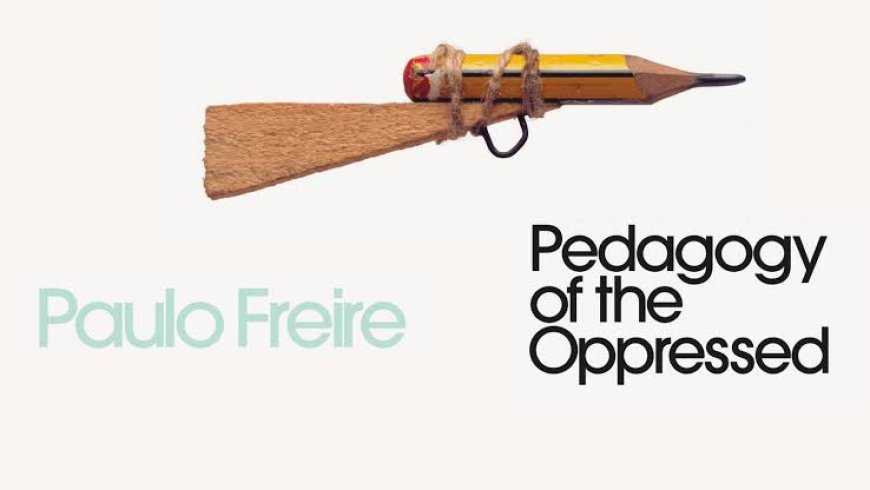
Freire’s central argument is that oppression is not only maintained through physical force or economic control but also through systems of knowledge and education. According to him, when leaders or institutions control how people think, learn, and understand their reality, they can influence society in ways that keep citizens from questioning authority. Freire called this the “banking model of education,” where learners are treated as passive recipients of information rather than active thinkers capable of challenging injustice.
In many discussions about governance and democracy in Africa, some analysts have drawn parallels with Freire’s ideas. They argue that when political systems limit freedom of expression, discourage public debate, or restrict civic participation, citizens may struggle to hold leaders accountable. In such environments, power becomes concentrated in the hands of a few individuals while the majority of people have limited influence over decisions that affect their lives.
However, Freire’s work is not simply a critique of leadership; it is also a call for empowerment. He believed that education should help people become aware of their social conditions and encourage them to participate actively in shaping their communities. This process, which he described as “conscientization,” allows individuals to recognize inequality and work collectively toward transformation.
Across Africa, many educators, activists, and civil society organizations have embraced these ideas as a way to promote critical thinking and citizen participation. Universities and social movements often reference Pedagogy of the Oppressed when discussing how education can empower communities to challenge injustice and promote more inclusive governance. The book has therefore become an important intellectual tool for those seeking to strengthen democratic values and social awareness.
At the same time, some critics argue that applying Freire’s ideas too broadly can oversimplify complex political realities. African countries have diverse histories, cultures, and political systems, and many scholars emphasize that development and governance challenges cannot be explained by a single theory. Nonetheless, Freire’s work continues to inspire debates about the relationship between knowledge, power, and social change.
More than fifty years after its publication, Pedagogy of the Oppressed remains a powerful lens for examining how power operates in society. Its message, that education should empower people to question injustice rather than simply accept authority, continues to resonate around the world. Whether applied to Latin America, Africa, or elsewhere, the book reminds readers that true development and democracy depend on informed citizens who can think critically, participate freely, and hold power accountable.